|
 |
 |
|
|
|
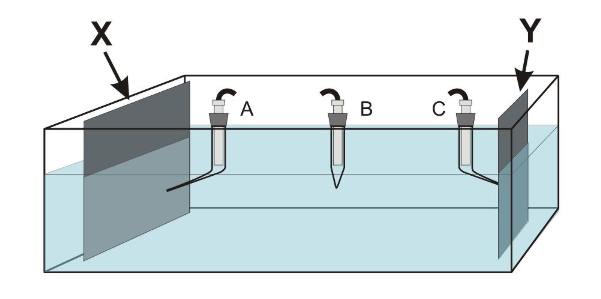
Electrochemical CellThe optimization of cell design in order to save energy while guaranteeing a high product quality is a continuous task. Some of the general requirements of cell design are:
Basic components in an electrochemical cell
Electrical energy does not exist naturally in any convenient form and it must be converted from some other energy form when needed. Chemical energy is the most practical source and is generally used in one of two ways. Fuel can be burnt in a heat engine, such as a petrol or diesel engine, or a gas turbine, which then drives an electrical generator. This process is inherently inefficient. Unconstrained by the thermodynamic limits of combustion or limitations of the Carnot cycle, fuel cells can use 40 percent less fuel than a contemporary power-generation system. Another contributing factor that influence fuel cell efficiency is that, unlike a conventional power plant, the fuel cell has no moving parts and does not require the mechanical energy of a rotating shaft, or lubrication. Chemical energy can also be stored in two other types of electrochemical power sources:
See also: Conductivity cell, Corrosion cell definition, Daniell cell, Impressed current cathodic protection system, Natural corrosion cells, Rotating cylinder test cell, Sacrificial anode cathodic protection
|